Regulation or Litigation? The Cost of Losing the Endangerment Finding
By Elea Castiglione
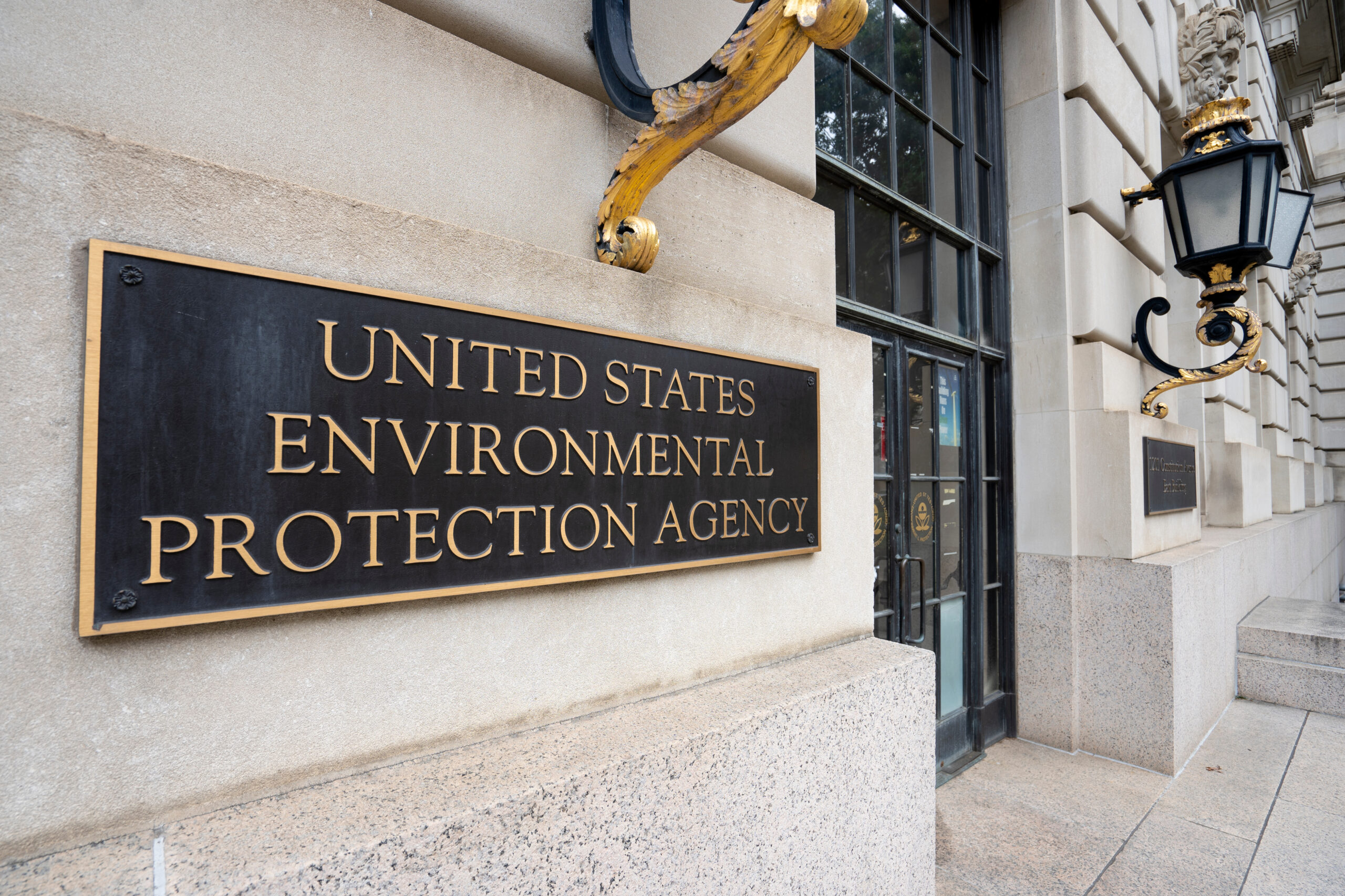
The EPA’s move to rescind the Endangerment Finding threatens to eliminate federal authority over greenhouse gas emissions. Elea Castiglione explores how Penn experts view the legal and policy implications, and why opening courts to climate lawsuits isn’t an adequate substitute.
The Endangerment Finding determined that greenhouse gas (GHG) emissions endangered public health and welfare, and formed the foundation of GHG regulation in the U.S. for the past 15 years. As the current EPA seeks to overturn the Endangerment Finding, the communities harmed by climate change may lose federal protections but gain new legal pathways to pursue damages from polluters.
In 2007, the Supreme Court of the United States determined in Massachusetts v. EPA that the Clean Air Act allows the Environmental Protection Agency (EPA) to regulate greenhouse gases (GHGs) as air pollutants. Massachusetts and other states petitioned the EPA to regulate GHGs under the provision of the Clean Air Act, stating that Congress must regulate “any air pollutant” that can “reasonably be anticipated to endanger public health or welfare.”
In Massachusetts v. EPA, the court directed the EPA to determine whether GHGs, which they concluded were a form of air pollutant, endangered public health and welfare. Two years later, in December 2009, the Administrator of the EPA signed the Endangerment Finding, which found that current and projected concentrations of six GHGs in the atmosphere threatened the public health and welfare of current and future generations. While this finding did not itself impose emissions reductions, it unlocked the EPA’s authority to regulate GHGs under the Clean Air Act, making the Endangerment Finding the foundation of GHG regulation in the U.S.
On August 1st of this year, the EPA issued a proposal to rescind the 2009 Endangerment Finding. If successful, this would dismantle the EPA’s regulation of GHG emissions from vehicles and likely eliminate other regulations on GHG emissions in other sectors. In its proposal, the EPA argues that the Clean Air Act does not give it the authority to regulate pollutants without immediate and direct local or regional effects. It points to vehicle emissions standards issued by the EPA, claiming that vehicle GHG emissions are not large enough to impact public health and welfare, and regulating them is too costly. The proposal further claims that the science linking climate change and GHG emissions is too uncertain, and thus the Endangerment Finding should never have been issued.
Legal analysis of the proposal released by EarthJustice described it as a “grab bag” of reasons to rescind the Endangerment Finding. A letter from the Union of Concerned Scientists with more than 1,000 signatories pushes back on the “scientific” argument for rescinding the Endangerment Finding: “As climate scientists, public health experts, and economists, we can attest to the indisputable scientific evidence of human-caused climate change, its harmful impacts on people’s health and well-being, and the devastating costs it is imposing on communities across the nation and around the world,” the letter says. “The scientific evidence on human-caused climate change and its consequences was unequivocal in 2009 and, since that time, has become even more dire and compelling,” it continues.
Arthur van Benthem, a Professor of Business Economics and Public Policy at the Wharton School, explained further that “if rescinding the Endangerment Finding leads to omitting climate damages for any proposed regulatory action or rollback (as is already the case with the current EPA proposal to rescind the GHG standards for vehicles), this leads to an incorrect calculation of the true net benefits of the policy.” He continued, “In an honest cost-benefit analysis, all costs and benefits need to be counted at their true societal value, including carbon emissions.”
Repealing the finding would leave more Americans exposed to climate damages, according to Chris Field, the Director of the Stanford Woods Institute for the Environment, “mean[ing] more cases of asthma and heart disease linked to poor air quality, higher food prices from climate-stressed crops, and economic losses as U.S. companies fall behind in global clean-tech markets.”
Sarah E. Light, the Mitchell J. Blutt and Margo Krody Blutt Presidential Professor and Professor of Legal Studies & Business Ethics at the Wharton School, explained “there is some legal debate, but if the endangerment finding is repealed, I would imagine that the next step for the current administration would be to seek declaratory judgments from courts—meaning any rules or regulations, in effect, that rely on the endangerment finding are essentially null and void.”
If the Endangerment Finding is rescinded, the core of GHG regulation in the U.S. will be upended. However, it may open up new legal pathways for those impacted by climate change to seek remedies in court from GHG emitters.
In the U.S., nuisances are actions that interfere with the health, safety, or comfort of public or private citizens. A public nuisance is when a person or group of people interferes with a right that the general public shares, and public nuisance cases are pursued by government officials on behalf of the public. In nuisance cases, the remedy for proven harm caused by the nuisance is damages, typically in the form of monetary compensation.
In 2008, the village and city of Kivalina, Alaska, filed a suit against 24 major energy companies involved in the oil and gas industry. Kivalina’s coast had long been protected from storms by Arctic sea ice that had been diminished as a result of climate change. As the ice receded, Kivalina’s residents faced increased threats from storms and were forced to relocate, which would cost between $95 and $400 million. Kivalina sought damages under the federal common law claim of public nuisance, arguing that the named energy companies’ massive GHG emissions caused climate change that resulted in the community losing its right to enjoy the land it was situated on.
In 2011, while Kivalina’s appeal was pending, the Supreme Court decided American Electric Power Co., Inc. v. Connecticut. In this case, a coalition of eight states and multiple conservation groups filed a lawsuit against the five largest electric utilities in American Electric Power Co., Inc. v. Connecticut, alleging that the utility companies constituted a public nuisance due to their carbon dioxide emissions, which contributed to climate change. The states lost the suit, and in a unanimous opinion, Justice Ruth Bader Ginsburg wrote, “the Clean Air Act and the EPA action the Act authorizes displace any federal common-law right to seek abatement of carbon-dioxide emissions from fossil-fuel fired power plants.”
The Ninth Circuit Court of Appeals, bound by the Supreme Court precedent established in American Electric Power Co., Inc. v. Connecticut, established further precedent when they dismissed Kialina’s case in 2012: that the displacement doctrine also prevented the court from issuing damages in these cases. Because the EPA had exercised its authority to regulate GHGs through the Endangerment Finding, federal common law claims were displaced, and Kivalina could not pursue its public nuisance case.
“In other words, if Congress has adopted a comprehensive regulatory scheme to address air pollution, including greenhouse gas emissions, we don’t want a bunch of piecemeal lawsuits brought by the city of Hoboken or the state of Rhode Island against the fossil fuel producers,” Light explained.
Cases focused on violations of state nuisance law, however, remain unsettled. According to Light, cities, states, and local governments are “making the argument that these fossil fuel producers have contributed to climate change and sea level rise, and that this has created a public nuisance that has damaged the city, state, or local government, and therefore, that these fossil fuel producer defendants should have to pay damages to the government entities.”
“The Supreme Court has already rejected the idea that anyone can make a claim under the federal common law of nuisance, but it remains an open question as to whether a party can seek damages under the state common law of nuisance,” she explained. In one such case, City of Hoboken v. Chevron Corp, Delaware and Hoboken, New Jersey, sued oil companies in state court, seeking damages for environmental harm caused by climate change that they say was worsened by the actions of oil companies. The case is currently being considered in state court.
Without the Endangerment Finding, federal courts could once again hear GHG-related nuisance claims. Thus, cases like Kivalina’s may become a viable way of forcing companies responsible for climate change to compensate the communities most impacted by it.
However, this is not an adequate replacement for the Endangerment Finding nor a solution to the gap in regulating GHG emissions federally and systemically that will arise in its absence. It is an “ex post remedy for entities or organizations or individuals or communities that have been harmed, but the Clean Air Act allows for ex ante regulation that reduces greenhouse gas emissions on a going forward basis from mobile and stationary sources,” Light explains. “And it’s not clear where that kind of limit would come from in the future. All we’re left with are remedies, not solutions for communities that have been harmed,” she continued.
The Endangerment Finding, which is grounded in real science, has been the foundation of the U.S. GHG regulation for the past 15 years. In its absence, communities who have been impacted by climate change may have new legal pathways to seek remedies for past harm to their health, welfare, and land. But as Sarah Light emphasized, these lawsuits only address damages that have already occurred. Without the Endangerment Finding, federal authority to regulate GHG emissions will be eliminated, leaving litigation as the only recourse for communities facing the increasing effects of climate change.
Elea Castiglione is an undergraduate student studying philosophy, politics, & economics with a concentration in public policy and governance, and minors in sustainability and environmental management and fine arts.
