Penn Climate Insights Launches to Advance Climate Education Across the University
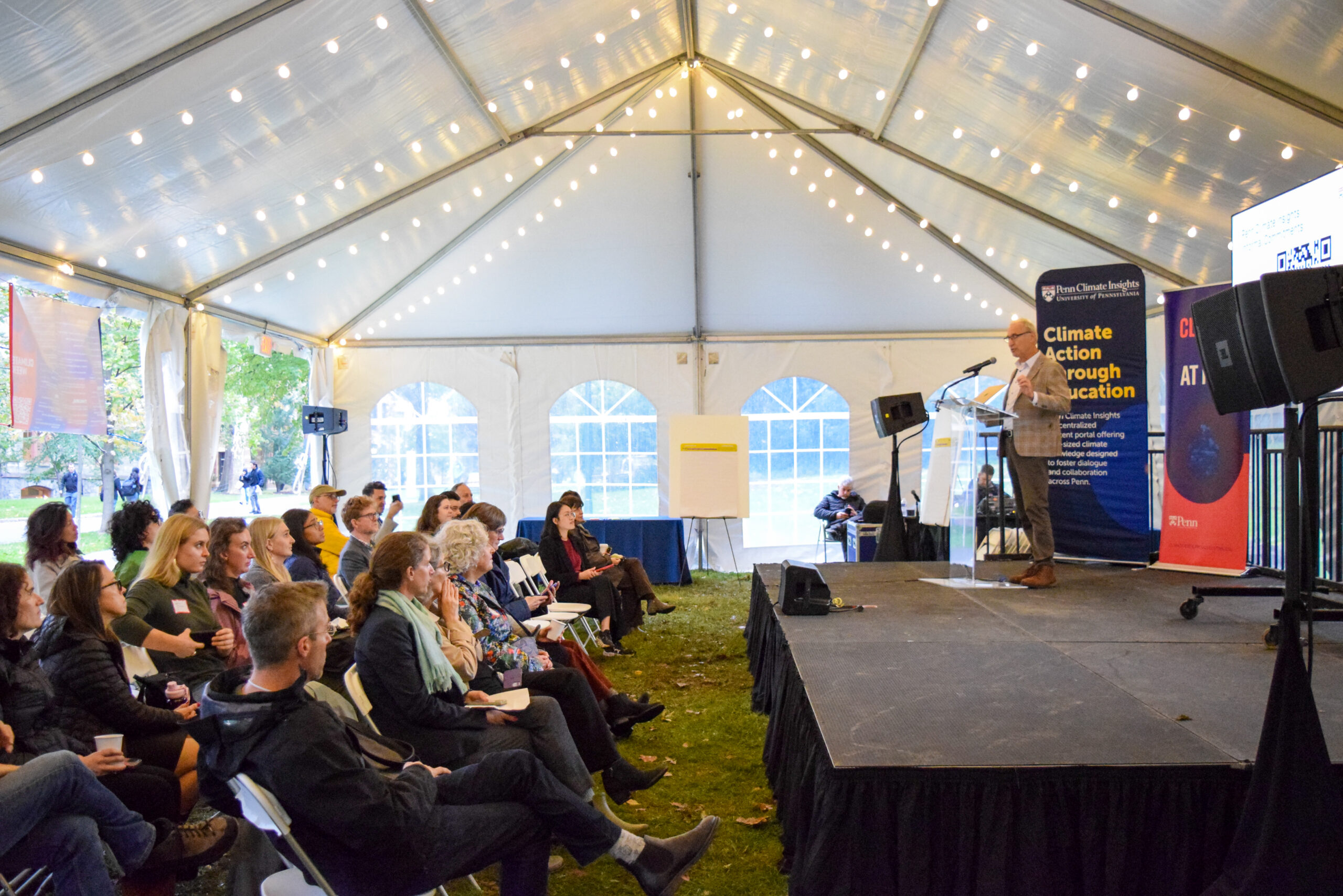
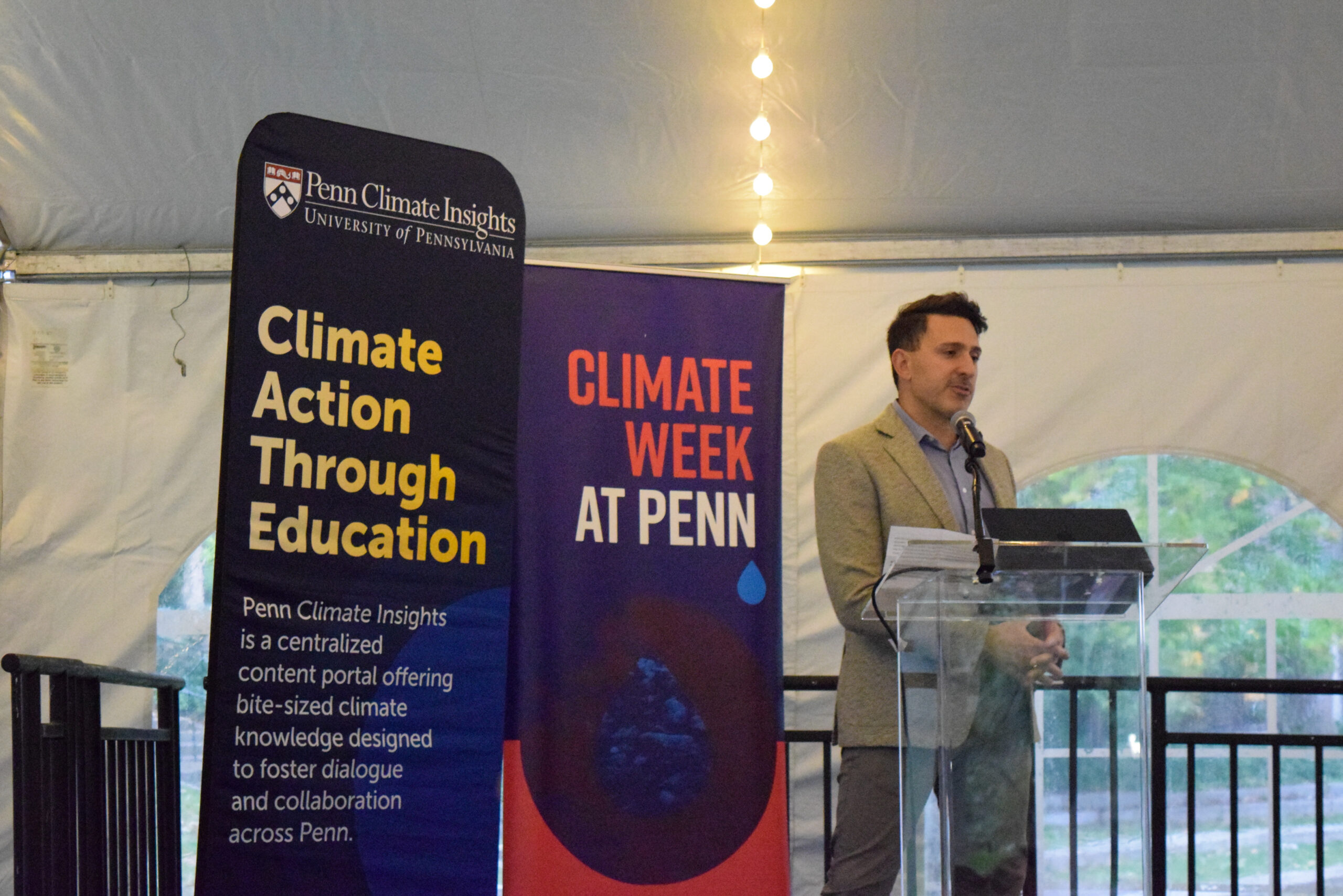
The Penn community gathered in the Climate Week at Penn tent on Monday, October 13, to celebrate the launch of Penn Climate Insights, a web platform developed by Penn Vet to make climate knowledge more accessible across the University.
Dr. Stephen Decina, Executive Director of Penn Climate, provided remarks at the launch, emphasizing the importance of climate education. “Climate change is not optional,” Decina stated. “It impacts every aspect of our lives—from the economy to health systems, food supplies, and infrastructure. This is exactly why climate education is essential to prepare every student for the world they will inherit and shape.”
Three Foundational Pillars
Penn Climate Insights is built on three foundational pillars:
- Verified climate insights that faculty can integrate into their courses across disciplines
- Practical tools and resources that support climate education in any classroom
- Programming that builds community and drives collaborative climate action
The platform weaves climate education throughout the entire Penn experience, ensuring that every student graduates with the knowledge to adequately address climate change.
A Living, Growing Resource
Dean Hoffman and the Penn Vet team developed Penn Climate Insights to foster dialogue and collaboration across the University. The platform is accessible via PennKey and offers a library of peer-reviewed articles, recorded lectures, and slides to facilitate climate education, along with toolkits and learning materials to help educators structure lessons and incorporate climate insights into coursework.
“When Dean Hoffman asked me to provide remarks, I was honored,” Decina said. “Because this is the exact kind of cross-disciplinary action required to effectively address climate change.”
The soft launch during Climate Week at Penn reflects the University’s evolving approach to climate education, one that prioritizes accessibility and collaboration. As the platform continues to develop, it will serve as a central hub for equipping students with the knowledge and tools to drive meaningful climate action.